Recovery Boots · 4 min read
Normatec Elite vs JetBoots PRO Plus: Which Cordless Boots Win?
Hyperice's Normatec Elite versus Therabody's JetBoots PRO Plus: lighter and stronger squeeze, or vibration and infrared on top.
By Recovery Desk, Recovery & Wellness Editor ·
We may earn a commission from links on this page. Learn more.
For years, compression boots meant a pair of inflatable sleeves tethered by hoses to a box on the floor. The two biggest names in recovery have since cut the hoses. Hyperice's Normatec Elite and Therabody's JetBoots PRO Plus both put the pumps inside the boots, so you can zip in on the sofa, at the gym or in a hotel room without a console. They cost about the same and look similar on a shelf. The spec sheets tell a more interesting story.
The contenders
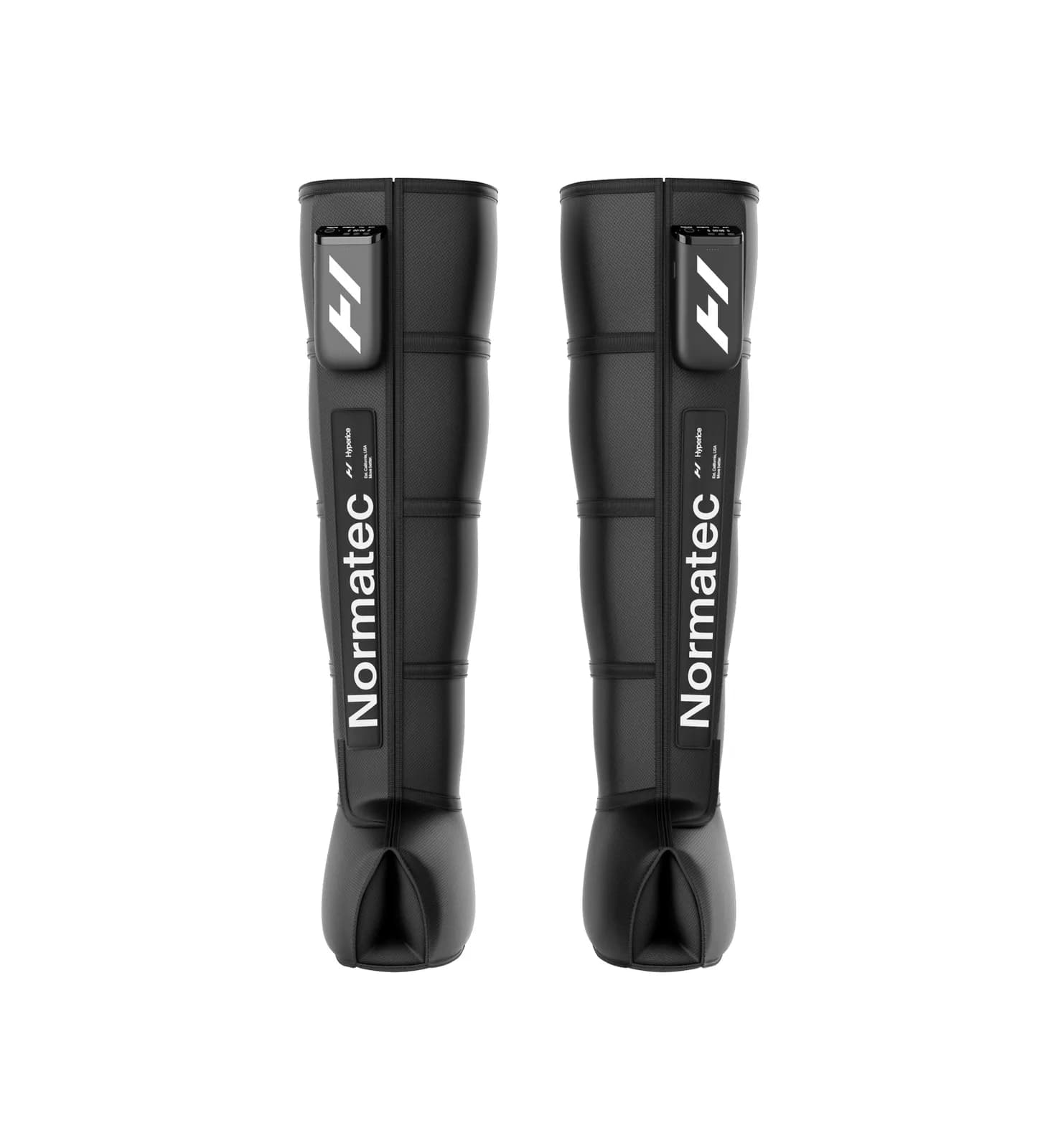
Hyperice
Normatec EliteCordless compression boots with the pump built in, so there's no box tethering you to the couch.
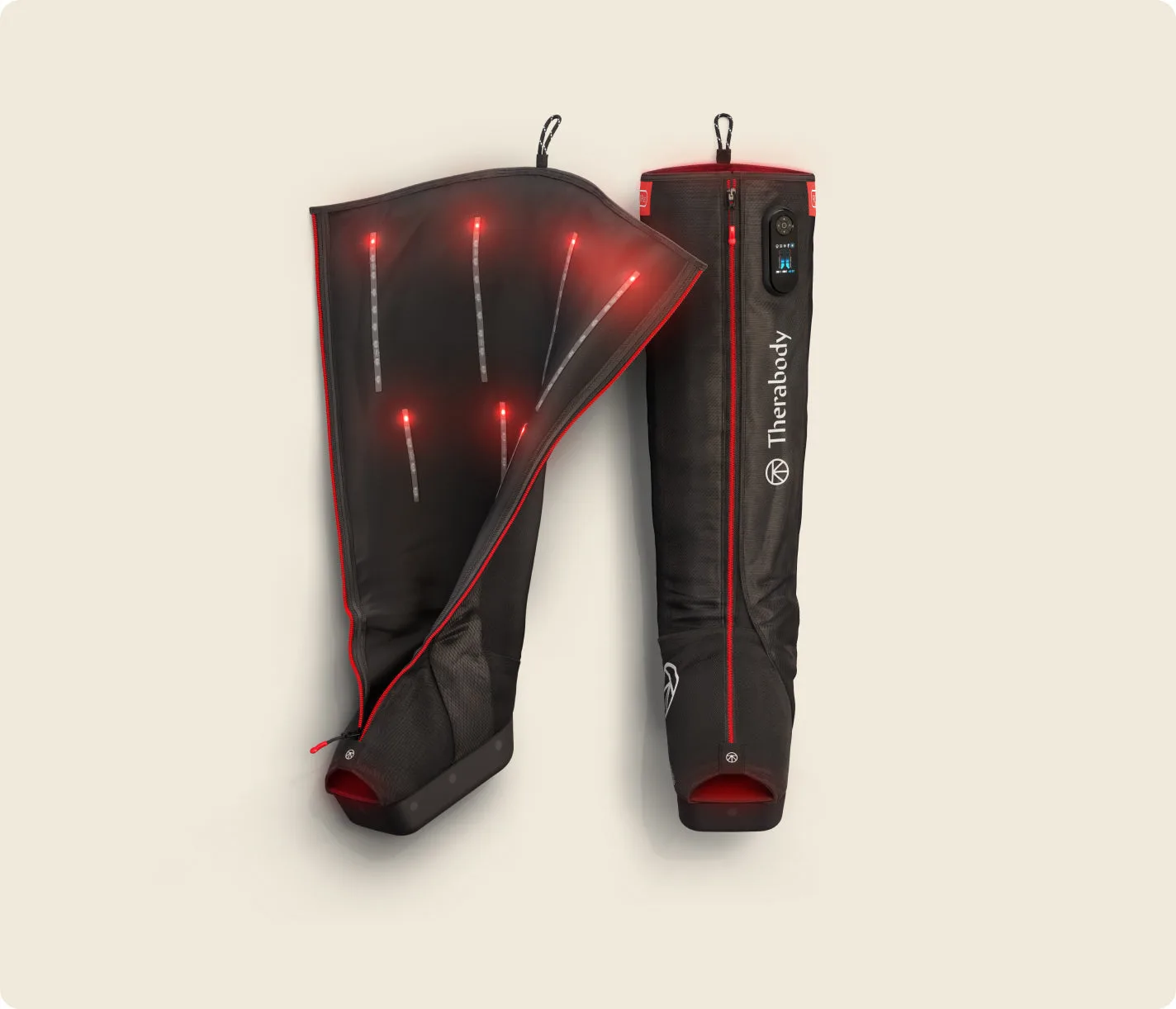
Therabody
JetBoots PRO PlusCordless compression boots that add heat and vibration to the squeeze.
Normatec Elite launched in June 2024 at $999 and now lists at $1,099 on Hyperice's site. It is the refined version of the boot that made pro locker rooms look like spacesuits: five overlapping zones, seven compression levels from 40 to 110 mmHg, and a control unit on each boot's outer thigh. Hyperice lists up to four hours of battery and says the boots can run while charging.
JetBoots PRO Plus list at $1,149.99. Each boot has four overlapping chambers and its own pump, with compression from 20 to 100 mmHg in 5 mmHg steps. Therabody then adds two things Normatec doesn't offer: vibration at three intensities and infrared LED light. Battery life is listed at 150 to 240 minutes, and sessions run from 10 to 60 minutes.
Compression: Normatec squeezes harder
On raw pressure, Normatec has the edge. Its top setting is 10 mmHg higher, it has one more zone, and ZoneBoost adds extra pressure to whichever zone you choose, which is useful if your calves or quads always need more attention. Therabody counters with finer control. Steps of 5 mmHg starting at 20 let you dial in a gentler session than Normatec's lowest level allows, which matters for first-time users and anyone who finds compression intense.
For context, a 2024 meta-analysis in Biology of Sport found that studies most often used sessions of 20 to 30 minutes at around 80 mmHg. Both boots cover that comfortably. The extra headroom at the top end is more about preference than protocol.
Extras: Therabody adds vibration and light
Vibration is the JetBoots' real point of difference. If you like a session that feels closer to a massage than a blood-pressure cuff, three intensity levels give you that. The infrared LED is harder to judge. Therabody doesn't publish wavelength or power density on the product page, and the LED switches off automatically after 45 minutes. Treat it as a pleasant extra, not a substitute for a dedicated red light panel. One clarification worth making: despite how some listings describe it, Therabody's spec page lists infrared light, not a heating element.
Normatec keeps things simpler. HyperSync pairs the two boots so the massage runs symmetrically down both legs, and the Hyperice app handles presets. There's no vibration and no light, which also means less to go wrong.
Weight, travel and sizing
This is where the two diverge most. Hyperice lists the Elite at 3.2 lb per boot, 6.4 lb for the pair, and calls it TSA friendly. Therabody lists the JetBoots PRO Plus at 11.3 to 12.8 lb depending on size. If the boots will live in a carry-on, Normatec is the easier companion. If they'll live next to the sofa, the difference matters far less.
Both come in three lengths. Hyperice sizes by height, with Standard covering 5'7" to 6'4" and advice to size down if you're between sizes. Therabody sizes by outseam, with thigh and height as secondary checks. Measure before ordering; a boot that's too short leaves the top zone squeezing your hip instead of your thigh.
Who should buy which
- Frequent travelers: Normatec Elite, for the weight alone.
- Anyone who wants the firmest squeeze or targeted zones: Normatec Elite, with ZoneBoost.
- Users who find compression intense or want a gentle start: JetBoots PRO Plus, which start at 20 mmHg.
- People who'll use the boots more if the session feels like a massage: JetBoots PRO Plus, for the vibration.
- Buyers paying with pre-tax health funds: check eligibility first. Hyperice lists the Elite as FSA/HSA eligible.
A note on the science
Compression boots are popular well ahead of the evidence. The Biology of Sport review covered 17 studies, 14 of them pooled in the meta-analysis, mostly small trials. It found at best moderate benefits for perceived pain and soreness, small and non-significant effects on muscle function, unclear results for muscle damage and inflammation markers, and no apparent effect on blood lactate removal. That points to a sensible way to buy: these boots most reliably make your legs feel better, and the best pair is the one you'll actually zip into after a long run. Anyone with circulation problems, clotting history or vascular conditions should talk to a doctor before using either.
Questions, answered
Is Normatec Elite better than JetBoots PRO Plus?
Neither is strictly better. Normatec Elite is lighter and reaches a higher maximum pressure across five zones. JetBoots PRO Plus add vibration and infrared LED light and offer finer pressure steps from a lower starting point.
Do JetBoots PRO Plus have heat?
Therabody's spec page lists infrared LED light and vibration, not a heating element. If heat is what you want, confirm the feature list before buying.
How long should a compression boot session last?
Studies most often use sessions of about 20 to 30 minutes. Both boots allow longer sessions, but start short and at lower pressure while you get used to them.
Sources
About the author
Recovery Desk · Recovery & Wellness Editor
Covers heat, cold, light and compression. Reads the studies so you don't have to, and flags when the marketing outruns the evidence.