Cold Plunges · 11 min read
Best Cold Plunge Chillers (2026): What Size You Need and Which to Buy
Cold plunge chillers compared on real cooling capacity (BTU/hr, not horsepower), lowest temperature, heating, filtration, noise and warranty, from DIY units under $1,000 to integrated plunges.
By Ellis Ward, Founder & Editor ·
We may earn a commission from links on this page. Learn more.
A cold plunge is a tub. The chiller is the part that makes it a habit instead of a weekly trip for ice. It is also the part that breaks, the part that hums, and the part that decides whether your water reaches 39°F on a July afternoon or stalls at 59°F. This guide compares the standalone chillers worth considering in 2026, explains how to size one honestly, and covers the integrated plunges where the chiller is built in. We have not bench-tested these units; the figures below come from manufacturer spec pages, owner measurements and support documentation, each linked at the bottom.
The best cold plunge chillers at a glance
| Chiller | Price (Nov 2026) | Cooling | Lowest temp | Heats? | Best for |
|---|---|---|---|---|---|
| Ice Barrel Chiller | $3,999.99 | 1/2 HP, outdoor-rated to 120°F air | 37°F (settles ~39°F) | No | Ice Barrel owners who want Wi-Fi and zero plumbing |
| Penguin Cold Therapy Chiller | From $1,949.99 | 7,500 BTU/hr, 450 W | 37°F recommended | No | Best value; outdoor above 32°F, 56 dBA |
| Penguin 1 HP | $1,899.99 | 10,000 BTU/hr, 830 W | Set by controller | No | Big tubs and hot garages, indoors (needs a separate pump) |
| Primal Elite | $2,900 sale (reg. $3,300) | 1 HP, 2,700 W cooling | 34°F | To 104°F | Hot and cold from one box, with 20-micron filter and ozone |
| LIT Method Phantom | $3,699 sale | 1 HP, 2,590 W cooling | 37°F | To 107°F | UV-C plus ozone sanitation |
| Active Aqua 1/4 HP | About $630–$710 | 3,010 BTU/hr, 460 W | 39°F set point | No | DIY builds on a budget, indoors or under cover |
If you'd rather not plumb anything, the integrated plunges below put the chiller, pump and filtration in one cabinet. You pay for the convenience, and a failure takes the whole tub out of service, but there is nothing to size or connect.
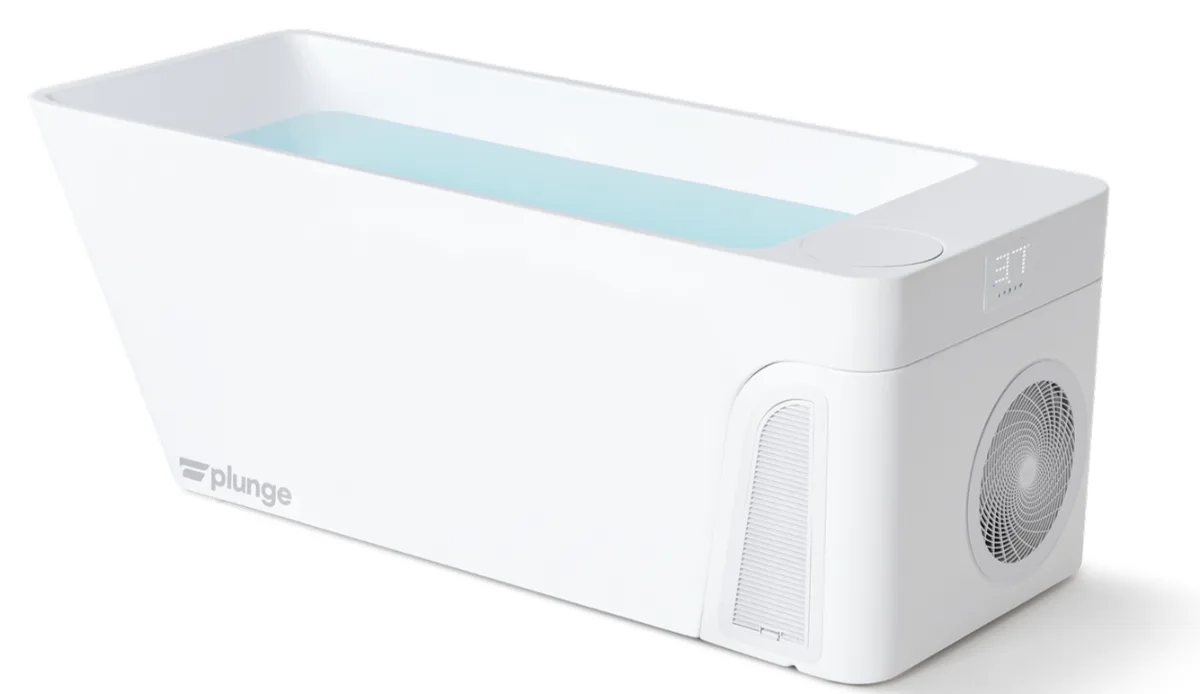
Plunge
All-InA plunge that finally looks like furniture instead of a chest freezer.
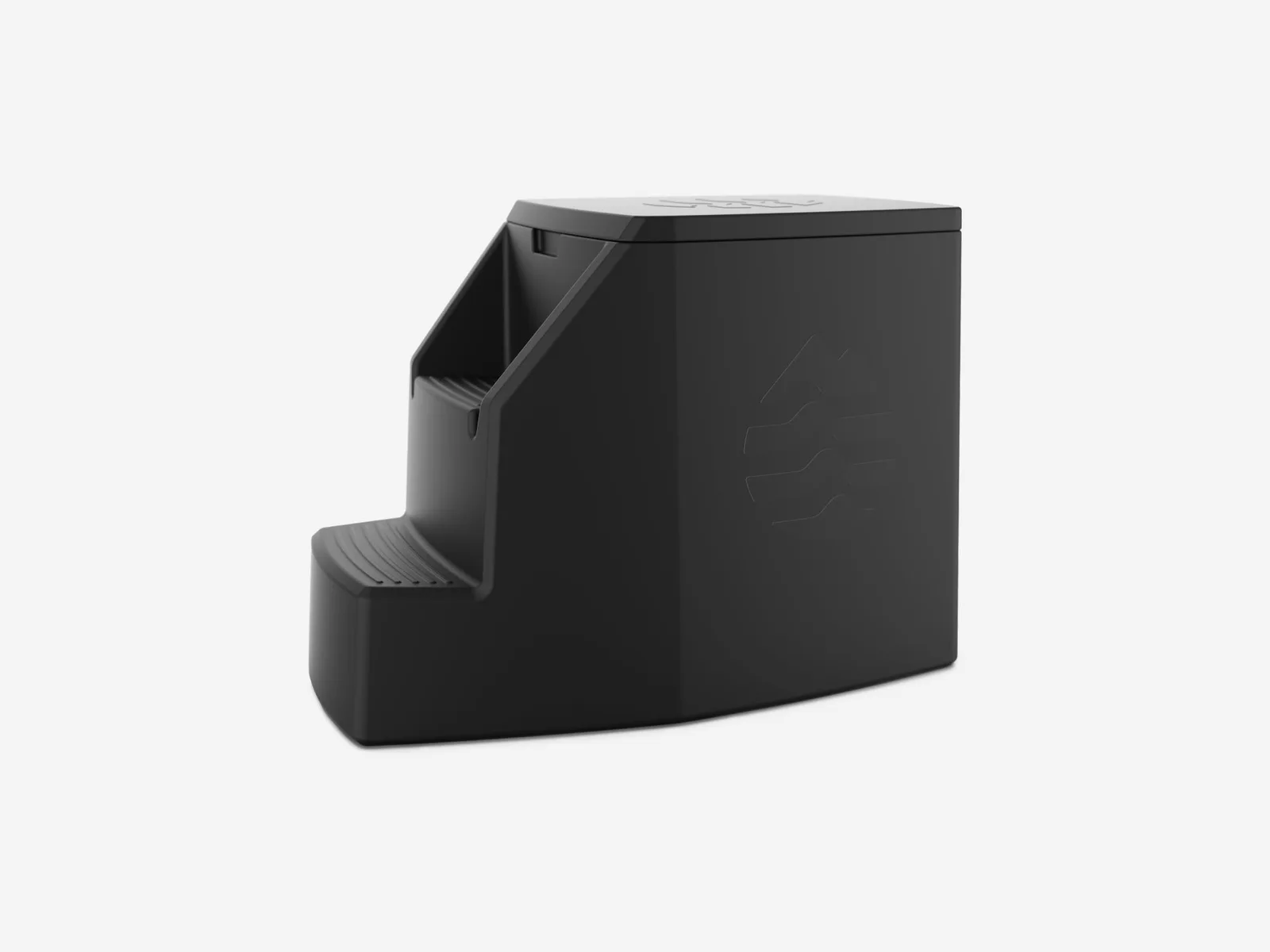
Ice Barrel
Ice Barrel 500 + ChillerAn upright barrel plunge with a chiller, for people who'd rather stop buying bags of ice.
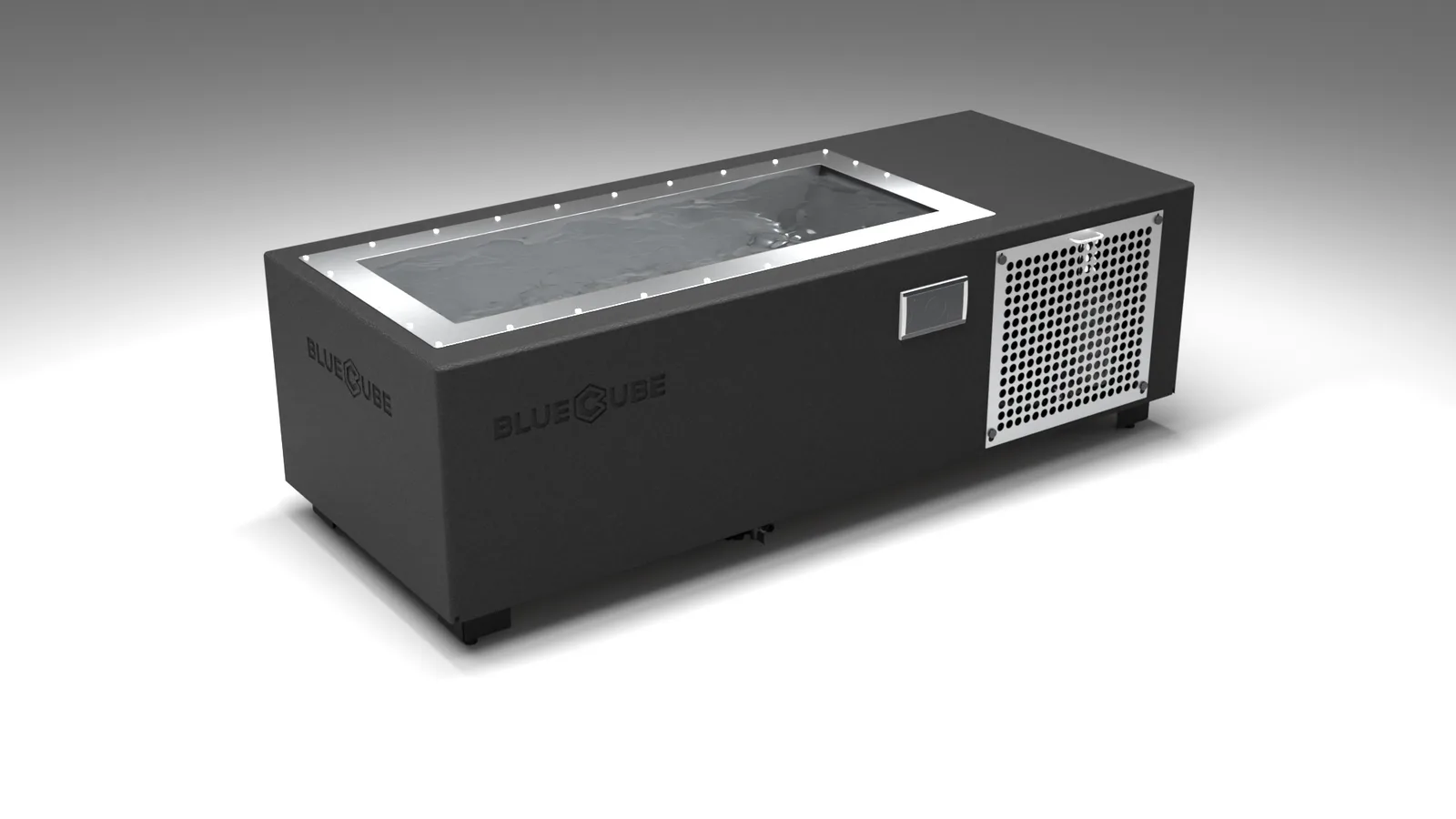
BlueCube
C1 Cold PlungeCommercial-grade cold therapy for the home that wants pro-team plumbing.
- [Plunge All-In](/p/plunge-all-in): $9,990 list on plunge.com (9 Nov 2026; it was on sale for $7,990 in September and October). A 0.75 HP chiller, 105 gallons, and a stated pull-down of 10–12°F per hour.
- [Ice Barrel 500 + Chiller](/p/ice-barrel-500-chiller): $5,749.98 for the pair, which is simply the barrel ($1,749.99) plus the chiller. The barrel holds 94 gallons.
- [BlueCube C1](/p/bluecube-c1): $16,500. A 13,600 BTU/hr chiller that cools and heats from 41°F to 104°F, at about 5°F per hour, with 20-micron filtration and ozone.
Horsepower is not cooling power
Chiller listings lead with horsepower because it's a familiar number. It describes the compressor's input, not how much heat the unit removes, and brands apply it inconsistently. Penguin's Cold Therapy Chiller draws the same 450 W as its 1/2 HP model but is rated at 7,500 BTU/hr instead of 5,000; Penguin's own page doesn't give it a horsepower figure at all, while dealers call it 3/4 HP. The number that tells you what a chiller does is BTU per hour: one BTU cools a pound of water by 1°F.
Even BTU ratings flatter. Industrial chillers are typically rated at 44°F leaving water and 95°F air, and capacity falls as the target temperature drops. A chiller holding 39°F is working harder than its label suggests, which is why the same unit can feel fast in a basement and sluggish in a Phoenix garage.
How big a chiller do you need?
Water weighs about 8.34 lb per gallon, so the energy you need to remove is simple arithmetic. The table below is the idealized case: no sun, no warm air, no pump heat and no bodies. Real pull-downs take longer, and after the first cool-down the chiller only has to fight heat gain.
| Tub size, 70°F → 39°F | Heat to remove | 5,000 BTU/hr | 7,500 BTU/hr | 10,000 BTU/hr |
|---|---|---|---|---|
| 100 gal | ≈25,900 BTU | ≈5.2 h | ≈3.5 h | ≈2.6 h |
| 105 gal (Plunge All-In) | ≈27,100 BTU | ≈5.4 h | ≈3.6 h | ≈2.7 h |
| 130 gal | ≈33,600 BTU | ≈6.7 h | ≈4.5 h | ≈3.4 h |
The bigger variable is where the tub lives. Owner reports are consistent: a 1/3 HP unit on a 116-gallon inflatable stalled at 59°F in a 92°F Georgia garage, and a 1/2 HP unit in a Florida garage ran nonstop without reaching 45°F. A sensible rule from those reports: size for your hottest month, not your average one. If the tub sits in sun or an unconditioned garage, go to roughly 10,000 BTU/hr; indoors with a good lid, 5,000–7,500 is usually enough.
Placement: the heat has to go somewhere
A chiller doesn't make cold; it moves heat from the water into the room. Box it into a cabinet or a garage corner and it breathes its own exhaust, and owners describe pull-downs slowing to under 1°F an hour. Give the exhaust side space: Penguin and its partners call for about 12 inches of clearance, Active Aqua about a foot all around, and Renu 15–27 inches depending on the vent.
- Indoor vs outdoor: Penguin's standard 1/2 HP and 1 HP are indoor units; its Cold Therapy and Outdoor HE models are rated outdoors above 32°F. Ice Barrel's chiller uses IP67-rated components.
- Below the tub, close to it: Penguin's pump isn't self-priming, so it wants the chiller within 3 feet of the tub's drain and not above it.
- Winter: drain any chiller not designed for freezing weather completely. One Penguin owner's warranty claim was denied after a heat-exchanger cap split over winter, on suspicion the unit wasn't fully drained (owner report).
- Condensation: cold lines sweat. Plan for a wet floor under indoor setups.
Filtration and sanitation
Cold water slows bacteria; it doesn't stop them. Every chiller here relies on a filter, and the premium systems pair it with ozone or UV. BlueCube and Primal both use 20-micron cartridges; Penguin's Cold Therapy kit uses a washable 150-micron filter and tells owners not to go finer than 50 microns, or flow suffers. Health-department pool guidance is clear that ozone and UV are secondary treatments: they leave no residual in the water, which is why many owners still dose a little chlorine or bromine. Plunge supports both chlorine and non-chlorine options.
'Chemical-free with ozone' is a marketing line, not a guarantee. Lid on, rinse before you get in, change filters on schedule, and test the water.
Power, noise and running cost
Nearly every residential chiller runs on 120 V. The exceptions are big industrial units such as Penguin's 2.5 HP, which needs a 208–240 V circuit. Give the plunge its own circuit: BlueCube requires a dedicated 120 V/20 A line, and Plunge's product page lists a dedicated 15 A circuit while its help center says the All-In needs 20 A and that shared circuits trip in summer heat. When the manufacturer disagrees with itself, wire for 20 A.
On noise, Penguin publishes 56 dBA, Renu 58 dB at about 3 feet, BlueCube's C3 'under 60 dB' and LIT 55–70 dB. Plunge and Ice Barrel only say 'quiet'; one long-term Plunge owner measured 52–58 dB at 3 feet. That's roughly a quiet dishwasher.
Running cost depends on the climate more than the chiller. US homes paid an average of 18.19¢ per kWh from January to August 2026 (EIA). A Plunge owner who logged 14 months on a smart plug saw 4.5–5.5 kWh a day in spring and fall, 6–8 in a hot summer garage and 2–4 in winter; an Arizona owner in afternoon sun averaged 9.1 kWh a day. That's about $27–$50 a month at the warmer end. No manufacturer publishes a verified daily figure. Run your own numbers in the cold plunge cost calculator, which also compares a chiller against buying ice.
What breaks, and how to avoid it
Most chiller problems are flow problems. Plunge's support pages say about 90% of issues come from filters that weren't changed; low flow lets the heat exchanger freeze, the unit throws a flow error and stops chilling. Penguin asks for continuous flow and warns against timers that cycle the pump on and off. The fixes are dull and effective: change filters on schedule, clean hoses every few months, and never run without a filter.
- Warranty fine print: one year is standard (Ice Barrel, Penguin, Primal, Plunge, with a free extended plan on Plunge at times). BlueCube offers three years parts and labor on residential units. Owners report claims denied over filter-change records or freeze damage, so keep receipts and photos.
- Third-party warranty handlers: some brands route claims through outside companies; read who actually pays before you buy.
- Apps can die: when Edge Theory Labs went out of business, its app went with it. A chiller with a local controller keeps working whatever happens to the company.
- Cheap off-brand units: owner reports describe dead-on-arrival units and no support. If you go budget, buy from a dealer with a clear return policy.
Which should you buy?
- You own an Ice Barrel and want it simple: the Ice Barrel Chiller. Wi-Fi scheduling, filter alerts and a stated ability to hold 37°F in 120°F air. It doesn't heat, and the warranty is one year.
- You want the most cooling per dollar: Penguin's Cold Therapy Chiller, or its adapter package for Ice Barrel tubs from $2,199.99. Made in Tennessee, quiet on paper, no app.
- You want hot and cold from one unit: Primal Elite or LIT Phantom. Switching from cold to hot takes hours, so this suits people who alternate by season, not by session.
- You want nothing to plumb: an integrated plunge. Read is a $5,000 cold plunge worth it? and the cold plunge buyer's guide first, then compare our cold plunge picks.
Whichever you choose, the right setting matters more than the lowest number on the box. Our cold plunge temperature and time guide covers what the research used and where the safety guidance lands.
Questions, answered
What size chiller do I need for a cold plunge?
For a lidded 100–130 gallon tub indoors, 5,000–7,500 BTU/hr is usually enough. In sun or a hot garage, aim for about 10,000 BTU/hr. Compare BTU per hour, not horsepower.
How long does a cold plunge chiller take to cool the water?
Taking 105 gallons from 70°F to 39°F needs about 27,000 BTU, so at least 5½ hours for a 5,000 BTU/hr unit and about 2¾ hours for 10,000 BTU/hr, before heat gain. Plunge states 10–12°F per hour for the All-In; BlueCube states about 5°F per hour for the C1.
How much does it cost to run a cold plunge chiller?
Owner measurements range from about 2 to 9 kWh a day depending on climate, or up to roughly $50 a month at the 2026 US average of 18.2¢ per kWh. A lid, insulation and shade cut it most.
Can a cold plunge chiller go outside?
Only if it's rated for it. Penguin's Cold Therapy and Outdoor HE models are rated outdoors above 32°F, and Ice Barrel's chiller uses IP67 components. Drain any unit not built for freezing weather before winter.
Do cold plunge chillers need a dedicated circuit?
Most run on 120 V, but give them their own circuit. BlueCube requires a dedicated 20 A line, and Plunge's help center says the same for the All-In.
Sources
- Penguin Chillers: 1/2 HP water chiller (specs and comparison chart)
- Penguin Chillers: cold therapy collection and prices
- Ice Barrel: Ice Barrel Chiller
- Ice Barrel: Ice Barrel 500
- Plunge: All-In
- Plunge help center: electrical requirements
- Plunge help center: FF flow error code
- BlueCube: cold plunge cost and C-line specs
- Primal Plunges: Elite chiller
- LIT Method: Phantom chiller and heater
- Hydrobuilder: Active Aqua chiller specs
- Renu Therapy: specification sheet
- Polar Monkeys: cold plunge chiller sizing guide
- US EIA: Electric Power Monthly, average residential price
- Recovery Stack: 14-month Plunge energy log
- Arkansas Department of Health: pool and spa operator guidelines (secondary disinfection)
- r/coldplunge: 1/3 HP chiller stuck at 59°F in a hot garage (owner report)
- r/coldplunge: denied Penguin warranty claim after winter storage (owner report)
About the author
Ellis Ward · Founder & Editor
Ellis started Restalogy to find out which luxury rest and recovery gear actually earns its price, and has used a Herman Miller chair daily for years. Some products here Ellis has used first-hand; the rest are rated from specs, owner reports and the published research.